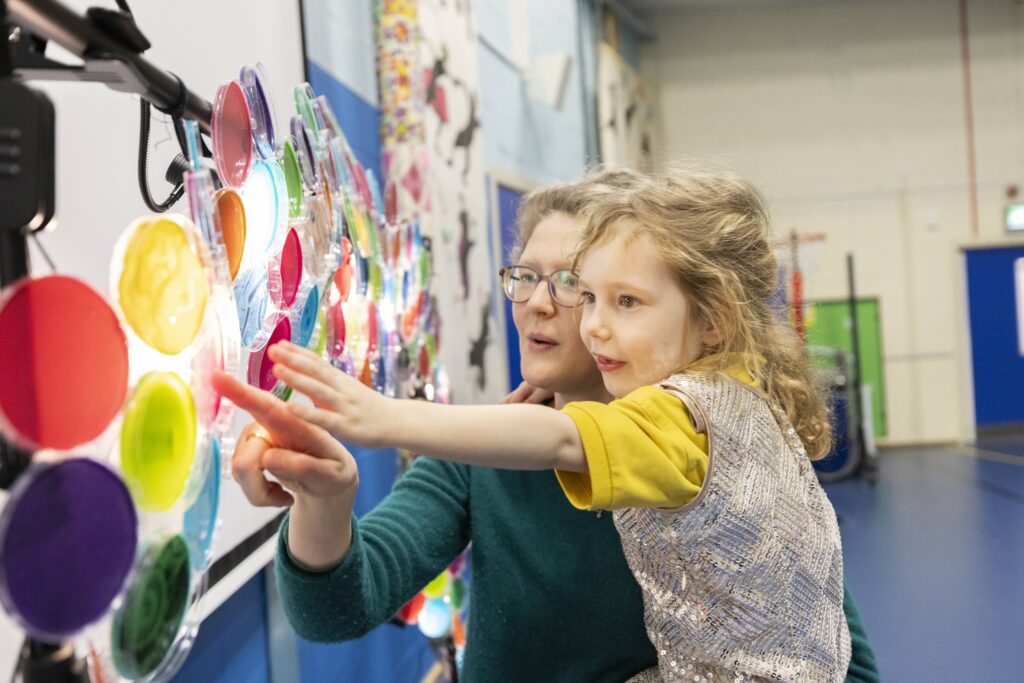
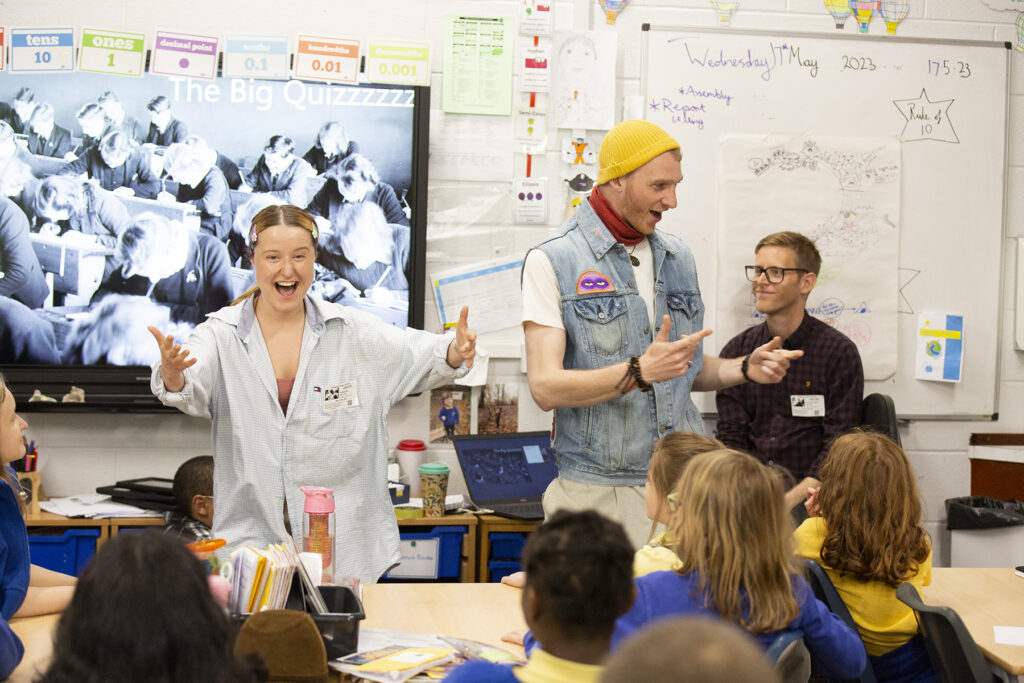
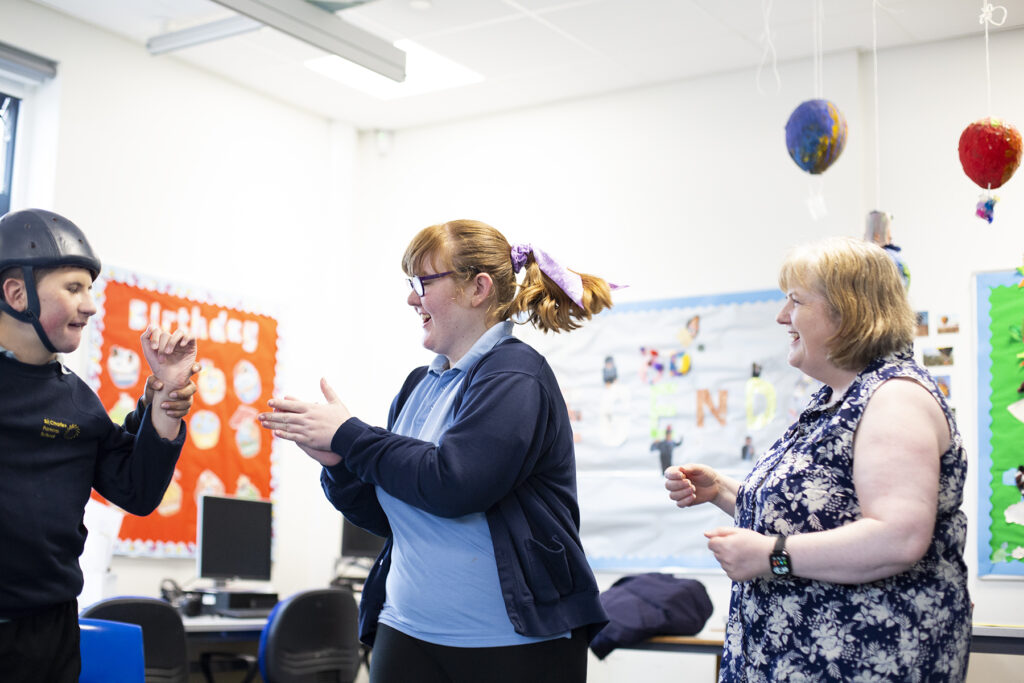
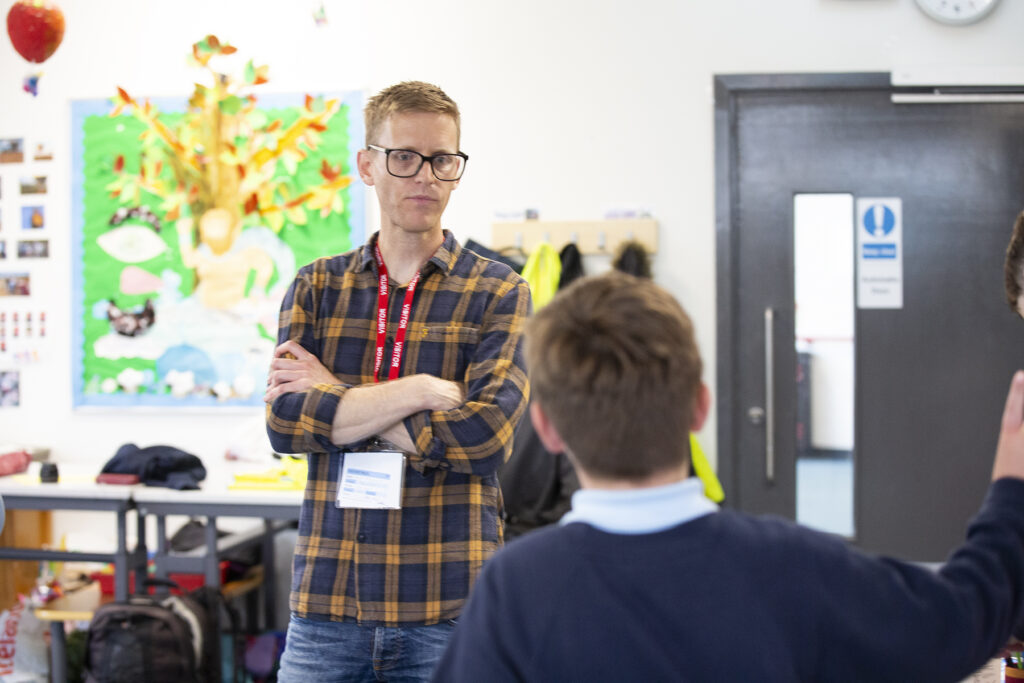
We’re absolutely thrilled to share that Cap-a-Pie has won Best Arts and Education Partnership at the North East Culture Awards 2025. After being shortlisted back in October, we headed to The Stockton Globe theatre full of excitement and came away with the award. It’s a huge honour to be recognised for our work with schools and universities across the North East and we’re so grateful to everyone who has been part of this journey.
The 2025 North East Culture Awards at The Globe Theatre, Stockton
This award celebrates the partnerships we’ve built with local schools and universities over the past year, where we bring learning to life through creative, participatory theatre projects.
Between September 2024 and September 2025, we worked with eight schools across Newcastle and North Tyneside, including Lemington Riverside, Broadwood, Christ Church CE, Hotspur, Byker, Chillingham Road and Carville Primaries and Sir Charles Parsons School, as well as partnering with Newcastle and Durham Universities.
Together, we delivered 95 workshops to 839 young people, exploring everything from coal mining heritage to marvellous microbes. We’ve seen children’s confidence, teamwork and engagement grow, particularly for students with additional needs, English as an additional language or those facing barriers to learning.
Teachers have told us they’ve adopted drama strategies across subjects and are seeing stronger student participation and critical thinking as a result. That kind of lasting impact is what we’re really proud of.
This recognition belongs to so many people. Thank you to the teachers who welcomed us into their classrooms and to the researchers who helped shape our projects and make sure they were grounded in evidence. Thank you to the young people who brought their ideas and creativity to every workshop. And thank you to our funders, who make all of this work possible.
As Craig Heeley, Headteacher at Lemington Riverside Primary School, said when we were shortlisted: “Working with Cap-a-Pie has had a transformative impact on our children. Their creative approach brings the curriculum to life in a way that is both inspiring and accessible for pupils of all ages.”
That’s exactly what we set out to do and winning this award shows us we’re on the right track. We’re not stopping here! We’ve got more creative adventures planned for 2026 and we can’t wait to keep working with schools, universities and young people across the region.
If you’d like to find out more about our projects or explore how we might work together, get in touch – we’d love to hear from you.
Thank you again for believing in what arts and education can do together. Here’s to the next chapter!
Want to know more about our work? Read about our recent projects:
We’re thrilled to share that Cap-a-Pie has been shortlisted for Best Arts and Education Partnership at the North East Culture Awards 2025. The awards celebrate the region’s incredible creative talent and we’re proud to be recognised for our work with schools and universities across the North East.
Photo: The Vanishing Act at Hotspur Primary School, Mark Savage Photography
Here at Cap-a-Pie we bring learning to life through creative, participatory projects. Our partnership with local schools and universities has enriched cultural and scientific education for children across the region.
Since 1996, we’ve specialised in collaborative theatre and education projects, blending storytelling, theatre, music and research to make complex ideas accessible and engaging. Working directly with schools and universities, we make sure projects are both creative and evidence-informed, giving children a voice in shaping the work and connecting learning to real-world issues.
Between September 2024 and September 2025, we engaged young people from across Newcastle and North Tyneside through partnerships with eight schools and with Newcastle and Durham Universities. Schools include Lemington Riverside, Broadwood, Christ Church CE, Hotspur, Byker, Chillingham Road and Carville Primaries, and Sir Charles Parsons School.
Through these long-term partnerships, we support young people’s development and access to arts activity while helping teachers build confidence in delivering creative approaches in the classroom.
Evaluation across 2024-25 shows that Cap-a-Pie’s approach consistently boosts young people’s engagement, confidence, teamwork, oracy and understanding of curriculum topics. This included 95 school workshops with 839 participants.
Our work is particularly impactful for students with additional needs, English as an additional language, or those who face barriers to learning. Teachers report lasting benefits, adopting drama strategies across subjects and seeing stronger student participation and critical thinking.
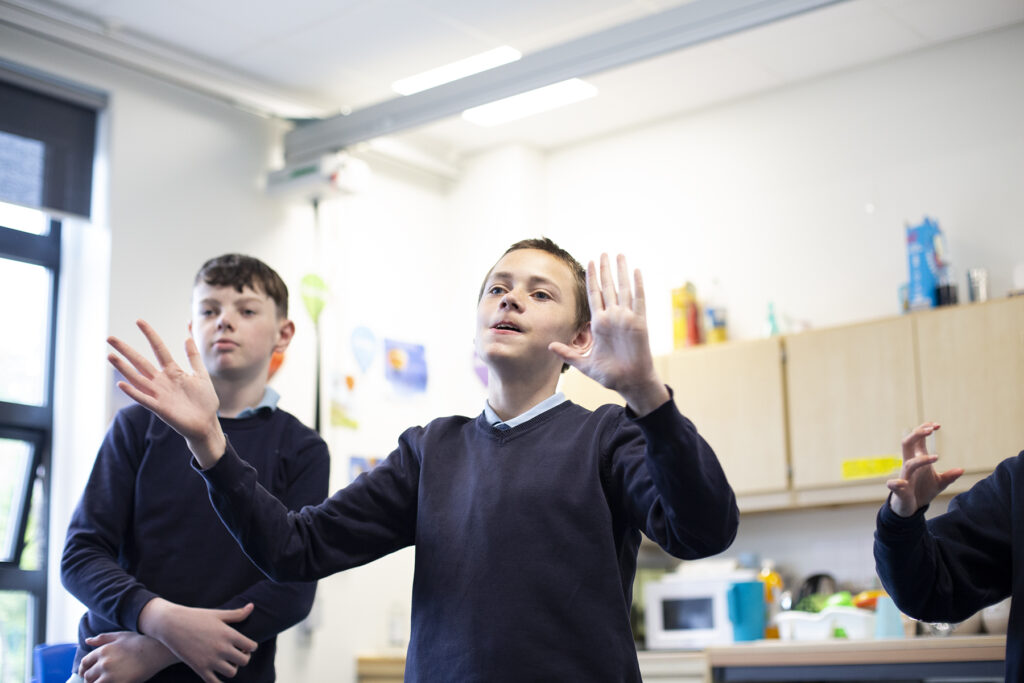
Photos (left to right): Marvellous Microbes, The Vanishing Act at Hotspur Primary School. Mark Savage Photography
Our projects are inspired by what young people care most about and are developed with teachers and researchers. Each project uses theatre to explore big ideas in a fun and supportive way:
Coal Mining & Climate Change explored the region’s coal-mining heritage and visions for a sustainable future. Students debated innovation versus safety, explored extreme weather and imagined fairer energy systems.
Marvellous Microbes brought science to life for 4-7-year-olds through storytelling, music and movement. Co-designed with scientists, it used integrated audio description and Makaton to make learning accessible.
The Vanishing Act used cabaret-style theatre to explore the decline of insects, with children’s ideas shaping songs, choreography and storytelling.
This is just a snapshot of our work and you can read more on our website. You can also read more about our recent projects in our latest blogs:
None of this would be possible without the teachers, researchers and funders who make our work so meaningful. Here’s what some of them had to say:
“Working with Cap-a-Pie has had a transformative impact on our children at Lemington Riverside Primary School. Their creative approach brings the curriculum to life in a way that is both inspiring and accessible for pupils of all ages.” Craig Heeley, Headteacher, Lemington Riverside Primary School
“The Cap-a-Pie projects made a real difference to how my students learned. I especially saw students with additional needs or language barriers thrive in these creative settings. Their confidence grew, and so did their ability to express themselves.” Rebecca Reay, Primary School Teacher
“They translated difficult topics into fun and engaging classroom activities that help the students to engage and understand… I took away a renewed appreciation of Cap-a-Pie and the work that they do.” Dr. Alistair Ford, Newcastle University
“As a scientist, I recognise that hard facts alone aren’t going to change the world for the better. We need the creativity of drama and music to create a sense of community and inspire collective action.” Dr Meryl Batchelder, Ministry of Eco Education
Our partnerships show how arts and education can work together to transform learning. Through hands-on, imaginative projects, children explore science, history and society in ways that are engaging, inclusive and thought-provoking.
We’re so proud to be shortlisted alongside so many inspiring organisations and we can’t wait to celebrate with everyone at The Stockton Globe Theatre on 27 November.
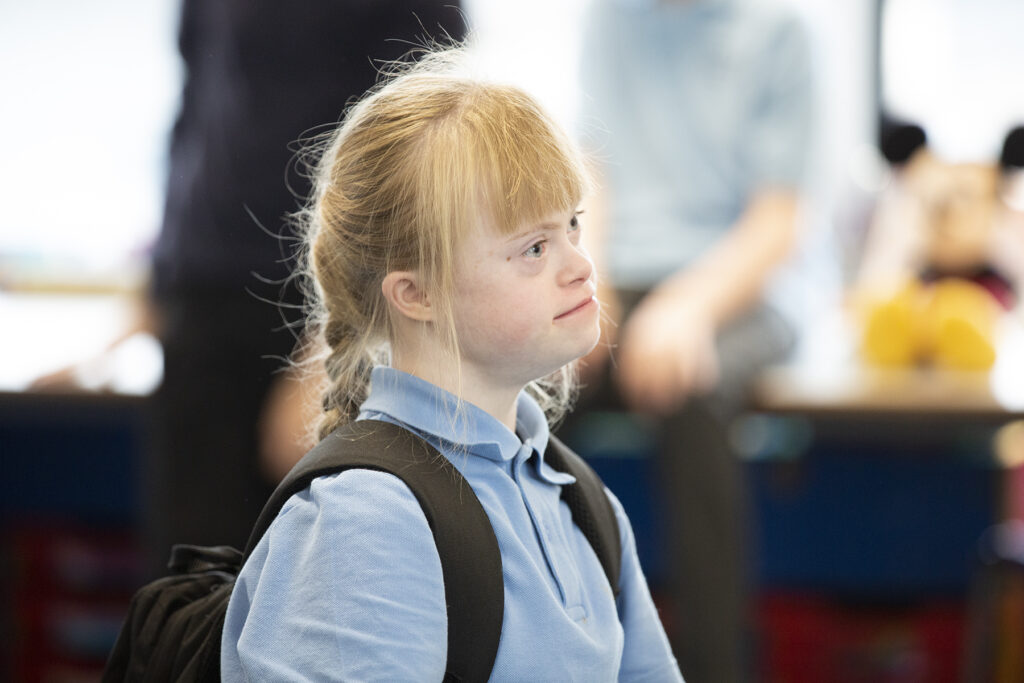
Photo: students and school staff member from Sir Charles Parsons School, Mark Savage Photography
Project overview
Earlier this year, Cap-a-Pie delivered a bespoke theatre project with Year 8 students at Sir Charles Parsons School in Newcastle. Inspired by Goodnight Mister Tom – the story of a wartime evacuee – the project explored themes of friendship, safety and identity, supporting students’ learning and providing space for creativity, reflection and fun.
The project took place over four sessions (one per week, 45 minutes each). It was shaped closely with the school and designed especially for this group, building on our previous work at the school and supported by funding from Newcastle City Council.
Why a bespoke project?
We’ve worked with Sir Charles Parsons School for a few years now, delivering two projects originally made for primary school children and adapting them for their cohort. Because the school has been so supportive of us and our work – and with the grant giving us scope to develop new projects – we wanted to make something just for them.
This time, the brief came from the school. Year 8 would be studying Goodnight Mister Tom in English and the teacher was keen to build in a drama experience connected to the book. That’s where Operation Walker began.
What we did
In three of the four sessions, Brad, Cap-a-Pie’s Artistic Director, was in-role as Sgt. Ryan O’Kane (in full camo gear). He was keen to point out there is no war happening right now, but said it was important to prepare – just in case – and asked the class to help him run a practice evacuation operation. Walker, the name of the project, refers to the location of the school.
Each workshop focused on a different idea:
Session 1 The group met Sgt. O’Kane and learned some military basics like saluting and hand signals – and played some games. They had a ‘tour of the barracks’, which was really a series of questions and choices: “Would you rather be on the top bunk or bottom bunk, and why?”
There was a very quick precis of WW2 (“Germany was the enemy and they tried to bomb lots of British cities”), and we tried to bring the era to life by borrowing a Box of Delights from North East Museums – a box full of objects linked to evacuees. There was a ration book, clothes, a suitcase, a real letter home from a child, and toys and games like Jacks. Students used these objects to create freeze-frames – for example, one student held a rabbit soft toy and pretended to be waiting on a train platform. Other students built out the image – becoming train tracks, luggage and people waiting.
Session 2 If children were evacuated to the countryside, what kind of adults should look after them? The class met three imaginary characters – two played by Brad, one by a student – and asked questions about their homes and lifestyles to decide who would make a good host. One lived in a very small house with three large dogs and loved to spend time working on cars – so there were lots of car tools lying around. The class thought maybe they weren’t the best option.
Session 3 This week focused on friendship. If you were suddenly sent to live somewhere new, how would you make friends? What does a good friend look like? Through drama games and discussion, the group thought about what it means to meet new people and how you connect with someone you don’t yet know.
Session 4 In the final workshop, Brad was joined by an evacuee named Delia (played by performer Jeannie May Adam). Delia was new to the area and the school, and the students welcomed her, introduced themselves, taught her some games and asked about her life – her hobbies, pets and where she’d come from. At one point, Delia became upset and said she was missing home. The students used their knowledge of Goodnight Mister Tom to suggest ways to cheer her up.
Photos: Left – Brad McCormick, Artistic Director at Cap-a-Pie. Right – students from Sir Charles Parsons School. Mark Savage Photography
The school’s perspective – Clare, Teacher at Sir Charles Parsons School
Why Goodnight Mister Tom? It’s the text we study in the spring term in Year 8, and it’s a story our students really enjoy. They get hooked into it and they really take the idea of being evacuated to heart.
What were you hoping the students would get out of the project? I wanted as many students as possible to have that drama experience based on Goodnight Mr Tom because we’ve never done that before. I also wanted the students to work with others they wouldn’t usually work with – to do something together. Our students are taught in learning pathways, not all of them are verbal – some use a range of communication strategies such as VOCA (communication device) signs or symbols. It’s really valuable to see those students offering comments, answering questions and sharing their ideas with others.
How did students respond? The whole project just blew me out of the water. They got really involved. Nobody fell behind – they all kept up and supported each other.
Our students never cease to amaze when they’re challenged – and they really were, with the range of drama conventions you used. I can’t explain how well it worked – but I think it’s down to your expectations of them, your role as Sgt O’Kane and the uniform. They were putty in your hands!
Were there any stand-out moments? So many. One student, who usually struggles with confidence, volunteered a question in the final session and kept eye contact – usually he looks down. That was massive.
And another student took charge as Sgt during a game – ‘Up straight! Is that all you can do?’ – he stayed in role and absolutely ran with it.
What’s the value of this kind of creative learning? It’s everything. It works on all their ‘behaviours for life and learning’ – especially communication, collaboration, creative thinking, reflection. It gives them the chance to express themselves and learn in a different way. I think everyone should be doing drama activities.
Cap-a-Pie’s reflections
This project was very much designed for this group – shorter sessions, tailored content and close collaboration with the teacher throughout. Students were chosen because staff felt they’d get the most out of it, and the fact that the workshops tied directly into the text they were studying helped everyone stay connected.
Being in-role worked well. The students really bought into the character of Sgt. O’Kane and responded brilliantly. For the final workshop where a performer was in role as an evacuee, we kept the planning deliberately light, hoping for organic interaction between students and Delia, and it really worked – they took the situation seriously and showed great empathy and compassion towards her.
We also used historical objects from the Box of Delights to bring the era to life in a tangible way and as a starting point to create theatrical images.
The students were brilliant at remembering the army hand signals from week to week – ’halt’, ‘move out’, ‘assemble’ – without any reminding.
Their questions for potential hosts were excellent and incisive: “What are your hobbies?”, “Does your house have a security code?”
In one workshop, we asked where they would want to go if they were evacuated from their city. One said the south coast “because of the beaches”, another chose Wales “for the landscape”, and one said the Scottish Highlands “because there are fewer people and fewer streetlights – so it would be safer from planes.”
Why this work matters
Working with Sir Charles Parsons School gives us the opportunity to connect with young people we don’t always have the chance to work with – particularly those with more complex learning needs. It challenges and inspires us to think differently, to adapt and respond in the moment during the workshop, and to keep refining our creative process to meet a wider range of needs.
Building on our existing commitment to access, this project develops our thinking – encouraging us to embed tools like Makaton right from the start, and to explore new ways of making sure every voice is heard.
This kind of partnership reflects Cap-a-Pie’s commitment to inclusive education and widening participation – not just in who we reach, but in how we create. We want our work to be accessible, meaningful, and joyful for all young people and those who often miss out on arts experiences.
Photo: student from Sir Charles Parsons School, Mark Savage Photography
Cap-a-Pie has partnered with local schools, Newcastle University’s Special Collections and North East Museums to deliver a creative, research-informed project exploring coal mining, climate change and the future of energy.
Students begin by learning about the region’s coal mining past, using artefacts from Newcastle University’s Special Collections including illustrated stories, first-hand accounts and historical colliery plans to spark questions.
What starts with pickaxes and pit ponies ends with bold ideas for a greener future, all imagined by young people. Here’s what happened when we took our Coal Mining and Climate Change project to North East schools.
In four lessons
1. The basics of coal mining
Students explored what coal mining involved – how it was mined, the jobs done by children, and why coal powered the region for generations. Rare archival items from Newcastle University brought this history vividly to life.
2. Safety vs progress
Would you prioritise innovation or workers’ safety? Students debated both sides and looked at what lessons still apply today.
3. Climate change and heatwaves
We unpacked the science of extreme weather and the role fossil fuels have played in driving it.
4. A just transition
What would a fairer, more sustainable future look like? Students imagined new worlds, new jobs and new energy systems.
Heard in the classroom
“Brad is a big ball of energy – climate change is a sad topic, but he makes it fun.” “Drama sticks in your head – you’re not stuck in a chair learning it.” “Ali from the university had a big brain. Knew lots. Always had an answer – even for my treehouse question!” “It’s not just learning – it stays inside you. You live it.”
Even the most reserved students joined in with confidence, and many showed real progress in how they explained ideas – especially around fairness, impact and decision-making.
Co-created and research-informed
This project was developed in collaboration with:
Dr Alistair Ford (Newcastle University)
Meryl Batchelder, Climate Educator
Peter Stark, Activist and Researcher
Newcastle University Special Collections Education Outreach Team
“You could really feel it when things started to click – when students made connections between the past and the future. They were asking great questions and thinking deeply.” Katy Vanden, Producer, Cap-a-Pie
“It was amazing to see how confidently students reasoned and asked questions. Even the quietest voices found a way in through drama.” Brad McCormick, Artistic Director, Cap-a-Pie
“The confidence is there. The creativity shines through. And the learning sticks.” Gareth Lord, Classroom Teacher, Hotspur Primary
“It was great to be able to talk directly to young people in the classroom. I was very happy to be involved in this project, especially since it links to local history and our sense of identity as a region. It’s important to allow young people to join the dots and understand that coal mining is an important part of our past but it can’t be part of our future.” Dr Alistair Ford, Newcastle University
This approach encouraged students to engage critically and creatively with both historical material and contemporary climate research.
For some, it was the first time they’d connected school subjects like science or history to their own lives and futures. With help from Newcastle University’s Education Outreach Team, they could see how stories from the past still shape decisions today.
At Cap-a-Pie, we’re all about sparking creativity and learning through fun, shared experiences. Our latest project, in partnership with Newcastle Dental Hospital, the School of Dental Sciences, Newcastle University, is bringing the science of dental health to life for Key Stage 2 students at Hotspur Primary School. This hands-on workshop is helping children learn all about teeth in a way that’s engaging, creative and most importantly – fun! With the help of Newcastle’s top dental experts, they’ve taken part in theatre activities, moral dilemmas and creative activities to learn about teeth.
The children at Hotspur Primary School have been getting stuck into the world of teeth, from the science behind plaque and saliva to the impact sugar has on their dental health and how AI might be used in dental care in the future. Dentists at Newcastle University are currently researching how new apps, that allow users to scan their own teeth and use AI to detect tooth decay, could be used in primary schools. The children explored what they thought about using AI in healthcare, and how they felt about technology playing a bigger role in looking after our health.
“Children are like sponges, they absorb everything,” said Dr Helen Rogers. “It’s at this age that you really have the chance to set them up with lifelong habits around looking after their teeth.”
Dr Richard Holliday agreed: “It’s about laying those healthy foundations early. That’s what will make a difference later in life.”
Dr Helen Rogers answers questions from Hotspur Primary School studentsDr Richard Holliday demonstrates a dental care app
As Gareth Lord, a teacher at Hotspur Primary School, said, “The students were really engaged by the drama-based activities where they explored dental care through role-play. It made the topic feel more real and fun for them.”
We’ve had some fantastic feedback from the students, and it’s clear that the interactive nature of the project made it a hit. “I liked it when the dentists came in” said one student, and another added, “It was fun learning new things about teeth!”
The role-playing activities like the freeze frames, where students had to act out scenes related to dental health, were very popular. “Freeze frames were really fun, and it was great working together,” said a student. The creative activities brought the subject to life and helped them understand how important looking after their teeth is.
The dentists were also impressed by how much the students already knew – but what stood out most was how creative methods gave them a deeper understanding of dental health.
“The children had a really good level of knowledge already – they could name the teeth and clearly had some great teaching before,” said Helen. “But this project helped them think in different ways, about who’s responsible for their oral health, about technology, and about how they feel about these things.”
“You get so much more from children when they can work in teams, plan their responses and properly engage with the ideas,” Helen added. “It’s very different from just asking them a question or giving them a lecture.”
One of the great things about this project has been the way it’s boosted the students’ confidence. Gareth shared how some students who were initially nervous about speaking in front of others gained confidence as the workshop progressed. “The activities gradually helped the students build their confidence, and by the end, they were presenting and sharing their thoughts in front of each other.”
Teamwork was another key focus. Students worked together in small groups, solving problems and sharing ideas. Gareth mentioned that this collaboration was a standout feature of the project. “The students worked really well as a team. The project challenged them to think critically about the topic, whether that was analysing the potential impact of actions or evaluating different perspectives.”
The dentists saw this too – how students grew in confidence, not just in what they knew, but in sharing ideas and working together.
Hotspur Primary School students performing in front of the class.
“They were so engaged, really enthusiastic,” said Helen. “I think the fact that the activities were practical and interactive helped so much. It’s a much richer experience, and it helps you hear what children actually think, not just off-the-cuff comments, but ideas they’ve thought through and discussed with each other.”
Based on how well the project has gone at Hotspur Primary we’re excited about the possibility of bringing this project to more schools and helping even more children learn about dental health in a fun and interactive way.
“At Cap-a-Pie, we believe creativity can help children make sense of big topics like health and wellbeing,” said Artistic Director Brad McCormick. “By using theatre, storytelling and imagination, we’re not just helping students learn, we’re helping them connect, explore and grow.”
This Earth Day, we’re excited to share what we’ve been up to at Cap-a-Pie over the last year. We’ve been working on some amazing projects that combine creativity, science, and a passion for looking after the planet. Here’s how we’re helping to build a greener future with young people, researchers and the community.
One of the highlights this year has been ‘The Vanishing Act’, a show that raises awareness of insects and their vital role in our ecosystem. In collaboration with Dr. Vivek Nityananda from Newcastle University, we’ve created a performance that helps young people and adults understand the importance of these tiny creatures. Recently, ‘The Vanishing Act’ was performed to a sold-out audience at Northern Stage, bringing this important issue to a wider public audience of families. We’re proud that the project won the Newcastle University Engagement & Place Award for Engaging for Health, Wellbeing, and Societal Benefit!
Liam Scarth Brad McCormick and Bridget Marumo at Hotspur Primary School devising The Vanishing Act, Mark Savage Photography
We’ve also worked with the Living Deltas Research Hub at Newcastle University, along with partners in India and Bangladesh, to explore how culture and nature shape our understanding of climate change. By sharing film exchanges and running workshops with children, we’ve helped young people from different parts of the world gain a new perspective on environmental challenges.
Young people are at the heart of everything we do at Cap-a-Pie. Our ‘Marvellous Microbes’ workshops have been a huge hit since we launched the project last year, sparking curiosity about the world of microorganisms and their role in sustainability. This summer, we took ‘Marvellous Microbes’ on the road to Barnard Castle and the Great North Museum: Hancock, engaging families in fun, interactive performances that teach about the importance of microbes. From breaking down waste to supporting agriculture, microbes are vital to a healthy planet, and we’re helping children and families learn about them in creative ways.
We’re also continuing to take ‘Climate Change Catastrophe!’ into schools, where we use drama to help students understand the climate crisis and how they can get involved in solving it. It’s all about making complex science feel accessible and inspiring the next generation to take action.
In addition to all the creative work, our Producer Katy had an inspiring chat with secondary school students as part of Green Careers Week at the Discovery Museum in Newcastle. She spoke about Cap-a-Pie’s work to tackle climate change and engage young people through theatre. It was fantastic to connect with the students and hear their thoughts and hopes for a sustainable future.
Brad also took part in a film for Newcastle City Council’s Youth Council, where he spoke about the connection between theatre and green careers. It’s a great reminder that careers in the green sector aren’t just about working outdoors – there’s a huge impact to be made through the arts as well.
We also ran a CPD event for educators, scientists and creatives focused on how science is helping protect our planet. The event explored creative ways to engage young people with complex environmental issues and climate change, and it was fantastic to see so many passionate people coming together to share ideas and strategies.
We’re excited about what’s coming next. With ongoing support from funders like the Paul Hamlyn Foundation, we’re continuing to bring theatre and science to classrooms across the North East. Whether through performances, workshops, or creative projects, we’re working hard to ensure young people are inspired to make a difference.
Together, we can make a real impact for generations to come.
Read more: read last year’s blog post on how we’re using theatre to tackle climate change and engage young audiences.
We’re excited to share a new animation by Kate Sweeney called A Different Kind of Mind. To create the animation Kate collaborated with insect researcher, or entomologist, Dr. Vivek Nityananda, with whom Cap-a-Pie also collaborated to make our show The Vanishing Act. This animation shares Vivek’s research and insights into the inner lives of insects as they navigate their world. We caught up with Kate Sweeney to learn more about her creative process, how she works, and the unique perspective she brings to this project.
Kate’s work is deeply rooted in drawing, with writing and sound often accompanying her visuals. “It’s all handmade. It isn’t a sort of filmic or technical animation process; it’s very handmade, probably slower than it could be, but it creates space for me to think,” she explains. This is a personal process of creating – one where each frame is carefully drawn, and the act of making the work itself becomes an integral part of the piece.
For Kate, animation is a way to bring small moments of everyday life to life. “Animation can add something magical – not fantasy, but a space that’s slightly apart from reality. It can make you see something in a new way,” she shares. This is a key aspect of her style, where the ordinary is transformed by movement and a touch of magic. Her animation isn’t about creating fantasy, but about capturing the fleeting, often overlooked details of life.
Kate’s animation A Different Kind of Mind gives viewers a unique perspective on Dr. Vivek Nityananda’s fascinating research into the behaviour and cognition of insects. Despite not being a scientist herself, Kate finds herself drawn to the small, intricate details of the research: “It’s fascinating, but it’s really strange. Research labs are these small worlds where you can make giant leaps – or take tiny details and try to draw meaning from them.”
The research focuses on how insects, such as bumblebees and praying mantises, perceive their environment and make decisions based on complex processes. Insects may have small brains, but their abilities are extraordinary. As Théo Robert, a researcher in Vivek’s lab, explains: “If you start paying attention to insects, they are all around us all the time.”
One of the key aspects of the research that has caught Kate’s attention is the idea of studying insects’ behaviour without attributing human emotions or qualities to them. As Kate explains, “It seems to me that Vivek and his team become so absorbed in understanding how these creatures use their attention that it creates a connection. This connection isn’t human, but it helps us understand these creatures better and, hopefully, live alongside them more harmoniously.”
“In the lab Vivek and his colleagues are revealing how insects, like bumblebees, detect flowers and make decisions. The bees can use memories to remember flowers, and their attention can be influenced by both rewards and environmental stimuli, such as a contrast against a background.”
These fascinating discoveries are visually represented in the animation, helping to bring a new understanding of these creatures to the audience.
As the project progressed, Kate reflected on the visual aesthetic of the animation, drawing inspiration from the research environment itself. “I might use video footage to start off with, of the lab and the scientists doing what they describe in the film. Partly so I can orient myself into that world,” she explains. These details help to ground the animation in the real-world setting of the research lab, lending it a sense of authenticity.
Kate drew the scientists, including Dr. Nityananda and his colleague Théo, to give the animation a sense of connection between the audience and the researchers who are driving the work forward. “Through this, the animation will not only bring the science to life but also create a more personal connection with the viewers,” Kate adds.
Now that the animation is complete, A Different Kind of Mind brings together Kate’s handmade process, Vivek’s research, and a unique creative approach to offer a new perspective on how insects experience the world. Through delicate and thoughtful visuals, the animation translates the cognitive processes of insects into visual moments that highlight the extraordinary abilities of these tiny creatures.
We’re excited to finally share Kate’s animation and the fascinating research behind it.
The Vanishing Act is a cabaret-style theatre show that takes audiences on an exciting journey into the incredible world of insects. Created through a unique collaboration between Cap-a-Pie, Dr. Vivek Nityananda of Newcastle University, and local schoolchildren, the show blends cutting-edge science and creativity to explore the global decline of insects and celebrate their extraordinary capabilities.
As the show heads to Northern Stage on Thursday 6 March, here’s a look at how this collaboration connects research, creativity, and community.
Dr. Vivek Nityananda, a research fellow at Newcastle University, has a passion for making science accessible. His work focuses on how insects solve problems – like how bumblebees choose flowers or how praying mantises pick their prey. But why use theatre to communicate this research?
“I think it’s a couple of things,” Vivek explains. “One is that I’ve been involved in theatre a lot myself, so it was a nice way of bringing together my interests. But also, I’ve been collaborating with Cap-a-Pie for many years now, since I first moved to Newcastle, really.”
For Vivek, theatre offers something that traditional public lectures can’t. “Obviously, I do some scientific public lectures. But in some ways, theatre attracts different crowds. You might have people who come for the theatre, and then they get involved in the science in a very different way. I think that’s what’s useful.”
“Too often, as researchers, we stay in our own community, writing papers for each other,” Vivek explains. “There’s a responsibility to make publicly funded research accessible to everyone.”
At the heart of The Vanishing Act is a real and urgent challenge – the dramatic decline of insect populations across the world.
“It’s a big challenge for scientists to find out why that’s happening and how we can resolve it,” says Vivek. “But also, I guess, for people to see how they can contribute – or even just to raise awareness that this is happening. It’s an important issue for everyone, not just scientists.”
Through a mix of storytelling, acrobatics, and music, The Vanishing Act highlights just how fascinating and vital insects are. “Part of what the show wants to do is to highlight that insects are cool – to create appreciation and love for insects, which doesn’t always come naturally to us,” Vivek adds.
The project began with classroom workshops where children explored insect behaviour, environmental challenges, and creative storytelling. These workshops not only sparked the children’s imaginations but also helped shape the performance.
“The workshops let us take research out of the lab and into the community,” says Vivek. “It was exciting to see the kids acting as praying mantises and bees, imagining how they’d respond to the world around them.”
Cap-a-Pie Artistic Director Brad McCormick emphasises the importance of involving children in the creative process: “Young people have such amazing imaginations, and their ideas bring the show to life. Their creativity adds so much colour, and it’s great to see their ideas reflected back to them on stage.”
And those ideas truly made it into the final performance. “A lot of it comes in the lyrics that we put into the songs, and in the movements as well,” Vivek explains. “We’d talk about the importance of insects, and then you get these slightly offbeat and unusual responses from the kids. That creativity brought so much to the show.”
For the children, seeing their ideas come to life in a professional performance was unforgettable.
One student shared: “It was funny when we saw our actions in the show. Our faces turned red when we realised it was actually in it!”
Another added: “Kids don’t have to worry about responsibilities, so they think of the most wacky ideas.”
With The Vanishing Act coming to Northern Stage, Vivek is eager to see how audiences respond.
“I’m really excited to see who turns up, what that cross-section of people will be like, and how they’ll receive it,” he says. “When we put on the work in progress version at the Star and Shadow, I really liked the questions people asked. It showed that they were thinking about it, that the concerns were there, and that they really appreciated what insects do in the world.”
“I hope audiences gain a deeper appreciation for insects – their complexity and the amazing ways they function in the world. And for researchers, this project is a reminder of the importance of engaging with the public to share the excitement of discovery.”
A panel discussion is planned for after the performance, something Vivek is particularly looking forward to. “Hopefully, we’ll get to hear what people felt when watching the play and have some really interesting discussions.”
Alongside the live performance, the project includes an upcoming animation by artist Kate Sweeney, offering another way to explore these incredible creatures.
“The animation is a bit different from the show,” Vivek explains. “It’s much more focused on our lab and the work we’ve been doing there. The idea behind it was to have something recorded that we could share widely. But now, we’re also planning to film the songs from the play and make those available online, which I really like. It’s great to have that record and continue engaging people beyond the live performance.”
For Vivek, projects like The Vanishing Act offer important lessons for researchers looking to share their work with the public.
“I think some of it is just how rewarding it is to actually go out into the community,” he says. “It’s a big change for us – rather than just focusing on our own conversations, it’s nice to have conversations more broadly. And it’s great knowing that people do engage with the research and know what’s happening.
And what about the long-term impact? “Obviously, you never know. But I hope that having had this experience as children might change how they think about things as adults, how it might influence their choices. Even just how they do things in their own lives. That would be really rewarding.”
If Vivek had to describe The Vanishing Act in just one sentence?
“I think of it as a fun show to learn about something important and discover new, cool, amazing things about insects.”
The Vanishing Act promises to be just that – fun, educational, and unforgettable.
The music of The Vanishing Act is more than just a backdrop – it’s a key part of the story, helping to bring the insect world to life and highlight the urgency of protecting it. Composer and musician Jeremy Bradfield has created songs that capture the energy and personality of the insect characters while reflecting the show’s focus on their struggles and importance in the natural world.
Jeremy describes his role as not just composing but working closely with the entire team. “I’ve collaborated with Hotspur Primary and Christ Church CE Primary Schools, Vivek Nityananda from Newcastle University, and the creative team to create the lyrics and music. It’s been a shared effort.” This collaborative process shaped the show’s songs, each with its own style to reflect the personalities of its three insect characters.
“The show has a cabaret feel,” Jeremy explains. “That suggested an old-school jazz sound, but as the music developed, it ended up going in different directions. Each insect inspired its own musical style. One song has a pop feel, another is funky and disco-inspired, and there’s also a classic cabaret number. It’s been great fun exploring these different styles to match the characters and their stories.”
At the heart of Jeremy’s process was balancing the show’s scientific themes with storytelling. “We wanted to include a lot of facts about insects – their behaviour, their importance – but it also needed to be fun and easy to follow,” he says. The challenge was turning complex ideas and packaging them in a way that was emotional, engaging and unforgettable.
This collaboration extended to the students of Hotspur Primary School, whose ideas helped shape the music. “The kids were amazing,” Jeremy recalls. “We worked together to create lyrics for the song ‘We Did It First’, which is about how insects have been doing incredible things – things humans might think are unique – long before us.” The song started as a playful battle between insects and humans, but Jeremy worked to ensure it felt celebratory rather than combative. “We even recorded the kids’ voices for the backing track, so their ideas are part of the final music.”
Jeremy also worked hard to capture the insects’ sounds and movements in his compositions. For example, ‘Now You See Me, Now You Don’t’ has a funky, rhythmic style that echoes the sleek and elusive nature of its subject, while ‘Just As Good As You’ uses a more traditional cabaret sound to reflect the storytelling element of the show. “Each song has its own mood and character, which helps bring the insects to life”, he says.
For Jeremy, the project has been as much about learning as creating. “I’ve discovered so much about insects – their behaviour, their role in the ecosystem, and the challenges they face. It’s been fascinating to work through all that information and bring it into the music.” He hopes audiences will leave the show feeling both entertained and informed. “I want people to feel like they’ve learned something important, but in a way that’s stayed with them because it’s wrapped up in a great story and music.”
As The Vanishing Act prepares for its performance at Northern Stage, Jeremy is keen to see the audience’s reaction. “Music has a way of connecting emotions, ideas, and characters that words alone can’t. I hope people will feel the joy, the urgency, and the wonder of this story – and maybe leave with a new appreciation for the amazing world of insects.”
As a science teacher, it’s part of my job to ensure pupils understand the importance of collecting and analysing evidence to back up their investigations. Working scientifically together we collate information, calculate averages, plot graphs, and make valid conclusions. It’s all standard procedure.
However, teaching about the climate emergency needs a slightly different approach. Simply discussing the facts with children and explaining the causes or consequences of the fossil fuel industry’s intention to burn every last drop of oil could easily instil a sense of serious foreboding. Adults have severely let children down. Yet, there is no room for doom in the classroom – none of this is the fault of young people. By developing a belief that they themselves can be changemakers and by giving them opportunities to take action, they can feel empowered to work together on a common cause and can send ripples into the wider community.
A few years ago, I took part in climate protests, marching in the streets to demand politicians deliver change. After decades of climate predictions being increasingly backed up with hard evidence to little effect, I saw that members of Extinction Rebellion had captured public attention through song, dance, costume and drama. I used to talk about STEM subjects and careers, but this made me truly appreciate why we need to include the A for Art to make STEAM. Art is fundamentally part of being human and through it we can communicate more effectively.
I began looking for a soft introduction to climate change for our Year 5s. There is still no mention of climate change in the primary curriculum, yet children overhear adults talking about it, see images in the media and on television, and understandably may develop feelings of sadness or anxiety as a result. There is a real need for pupils to appreciate that, although there are some exceptionally wicked problems in the world, their own actions can have a positive effect.
As soon as I came across Cap-a-Pie’s incredible Climate Change Catastrophe!videos, I knew I’d found what I was looking for. My classes watched the series of videos over a few lessons, had plenty of time for discussion, and sang along with the songs. The pupils then made model wind turbines, talked about the solutions we already have, and used creative thinking to come up with ideas of their own. Above all, although the science in the videos is thoroughly robust, there was laughter and smiles in the room.
Using drama, comedy, and theatre to teach children about climate change is effective because it makes complex and often alarming topics more engaging and accessible. These creative methods capture children’s attention and make learning memorable by combining education with entertainment. Drama and theatre allow children to empathise with different perspectives and scenarios, fostering a deeper understanding of the issues. Comedy can alleviate the stress associated with climate change, making it easier for children to discuss and explore solutions. These teaching methods promote active participation, critical thinking, and a sense of agency in young learners.
In addition, although my own music teacher once suggested I don’t have a musical bone in my body, I absolutely appreciate that music can make the learning process more enjoyable. It conveys messages in a fun and emotionally impactful way, helping children to connect with the subject. Songs with catchy lyrics and rhythms can simplify complex topics, making them easier to understand and recall. Integrating music into climate education enhances creativity, retention, and emotional engagement, making the subject more relatable and inspiring. A cross curricular approach to education for sustainability has incredible benefits, as it shares the teaching load across subjects and increases the impact for learners.
The team at Cap-a-Pie has continued to amaze me with their creativity with The Vanishing Act, on the staggering decline in insect populations and Marvellous Microbes. They have a talent for making complex ideas tangible. As a scientist, I recognise that hard facts alone aren’t going to change the world for the better. We need the creativity of drama and music to create a sense of community and inspire collective action, motivating children to step up and be seen. Most of all it can help to bring joy into their lives on our rapidly changing planet.
Dr Meryl Batchelder is the NE regional coordinator for the Ministry of Eco Education. After a PhD in environmental science, she gained 15 years of experience as a secondary science teacher before leaving the chalkface to focus on developing climate and sustainability initiatives in education. She is also a Climate Ambassador with STEM Learning.
We use cookies on our website to give you the most relevant experience by remembering your preferences and repeat visits. By clicking “Accept”, you consent to the use of ALL the cookies.
This website uses cookies to improve your experience while you navigate through the website. Out of these, the cookies that are categorized as necessary are stored on your browser as they are essential for the working of basic functionalities of the website. We also use third-party cookies that help us analyze and understand how you use this website. These cookies will be stored in your browser only with your consent. You also have the option to opt-out of these cookies. But opting out of some of these cookies may affect your browsing experience.
Necessary cookies are absolutely essential for the website to function properly. These cookies ensure basic functionalities and security features of the website, anonymously.
Cookie
Duration
Description
cookielawinfo-checkbox-analytics
11 months
This cookie is set by GDPR Cookie Consent plugin. The cookie is used to store the user consent for the cookies in the category "Analytics".
cookielawinfo-checkbox-functional
11 months
The cookie is set by GDPR cookie consent to record the user consent for the cookies in the category "Functional".
cookielawinfo-checkbox-necessary
11 months
This cookie is set by GDPR Cookie Consent plugin. The cookies is used to store the user consent for the cookies in the category "Necessary".
cookielawinfo-checkbox-others
11 months
This cookie is set by GDPR Cookie Consent plugin. The cookie is used to store the user consent for the cookies in the category "Other.
cookielawinfo-checkbox-performance
11 months
This cookie is set by GDPR Cookie Consent plugin. The cookie is used to store the user consent for the cookies in the category "Performance".
viewed_cookie_policy
11 months
The cookie is set by the GDPR Cookie Consent plugin and is used to store whether or not user has consented to the use of cookies. It does not store any personal data.
Functional cookies help to perform certain functionalities like sharing the content of the website on social media platforms, collect feedbacks, and other third-party features.
Performance cookies are used to understand and analyze the key performance indexes of the website which helps in delivering a better user experience for the visitors.
Analytical cookies are used to understand how visitors interact with the website. These cookies help provide information on metrics the number of visitors, bounce rate, traffic source, etc.
Advertisement cookies are used to provide visitors with relevant ads and marketing campaigns. These cookies track visitors across websites and collect information to provide customized ads.