It is hard to believe that Cap-a-Pie is 30 years old. For a small arts organisation, continuing to thrive 30 years after it was founded is a real achievement.
I think the reason for our continued success can be traced to our ongoing commitment, from the very beginning to today, for Cap-a-Pie to be useful to communities in the North East. The DNA of our organisation has always been focussed on how we can share theatre in ways that make a real difference to people’s lives.
Over the years Cap-a-Pie has been something of a chameleon, adapting to changing circumstances. Much of this has been necessitated by changes in the funding landscape as political priorities and concerns have shifted. However, the heart of our work has remained working alongside people to think and learn using theatre.
I’d like to take this moment to thank everyone who has been part of our journey. Whether you’re a teacher whose class has worked with us, someone who has programmed, commissioned or funded our work, whether you’ve been to one of our performances, or whether you’re one of the hundreds of young people who have taken part in our workshops. Over the coming decades we plan to continue making thought-provoking, exciting and meaningful theatre. We look forward to continuing that journey together.
Foreword from Sam Patterson, Chairperson
Turning 30 is quite something. This is a significant milestone that invites us to look back and reflect on everything that has brought us to this point. It is also a moment to look forward and contemplate our hopes for the future.
As the Chair of Trustees of Cap-a-Pie it is my great pleasure to introduce this report and celebrate what Cap-a-Pie has achieved since it began in 1996.
From the very start, Cap-a-Pie believed that theatre can be useful, valuable and beneficial to people. It can be a way for people to explore ideas, ask questions, understand each other and make sense of the world they live in.
As trustees, we are proud to support the brilliant team behind Cap-a-Pie and are continually impressed by their ability to adapt and evolve in changing and sometimes challenging circumstances. Their unwavering dedication to inspire and empower young people via artistic excellence and strong partnerships is exceptional.
Now more than ever, young people are growing up in a world that can feel complex and uncertain. Spaces where they can feel safe, included and encouraged to think creatively, express themselves and explore big ideas together are vital.
Cap-a-Pie continues to find new, thought-provoking, imaginative ways to connect with young people, teachers, researchers and communities, creating experiences that are both meaningful and enjoyable.
I hope this report gives you a sense of the creativity, care and curiosity that has carried Cap-a-Pie through its first 30 years. We are grateful to all the partners, communities and young people who’ve helped shape the journey so far and we look forward with confidence and excitement to the next chapter of Cap-a-Pie’s work.
Our Reach
Over the past decade, Cap-a-Pie has continued to work alongside schools, researchers and communities across the North East. During this time, we have:
Engaged with 6,000 young people in schools
Created thought-provoking performances for over 7,000 audience members
Worked with over 30 schools
Partnered with 7 universities
Performed at the National Theatre and COP26, the UN climate conference
History
Cap-a-Pie began with three graduates from Northumbria University in 1996. Gordon Poad, Mark Labrow and Annie McCourt had met studying drama and picked the name Cap-a-Pie from a dictionary. They liked that it sounded kind of classical, kind of European and also kind of Geordie. They also liked the meaning – from head to foot – theatre from head to foot.
“What always mattered to us was that the work had real value for the people taking part. We wanted to make good theatre, but we also wanted people to feel that they were part of something meaningful and creative.” Gordon Poad, Founder
The company’s first production was ‘The Wild Man’ based on a book by Kevin Crossley-Holland. The team worked with 8-12 year olds, supported by a grant from Derwentside District Council and the resulting performance was shared with parents.
From the start the company was focussed on how theatre and drama could be useful in people’s everyday lives, combined with the understanding that for this to be successful the productions and projects had to be high quality artistic experiences for all involved.
For much of the organisation’s first decade, Cap-a-Pie was based in County Durham. Highlights in this time included the Cap-a-Pie Creative Campus, where staff worked with young people excluded or at risk of exclusion from mainstream education and setting up and running ‘The Store’ an arts venue and health living centre in Dipton.
This was followed by a long period of working closely with schools and teachers, much of this work supported by New Labour’s Creative Partnerships scheme. The scheme paid for artists to work alongside teachers to use the arts to teach young people. The approaches crafted during this time continue to inform much of Cap-a-Pie’s work in schools today.
Cap-a-Pie also began to work more closely with university partnerships. From 2012 onwards much of the organisation’s work has been developed in close partnership with scientists and researchers.
Over the years Cap-a-Pie has had to adapt, develop and remake itself. Both due to the needs of the communities we have served and the changing funding landscape. What hasn’t changed is the commitment to working with people to make thought-provoking theatre that makes a real difference to people’s lives.
Milestone Projects
Over three decades, our work has taken many forms. Below are some of the projects that have shaped Cap-a-Pie’s journey.
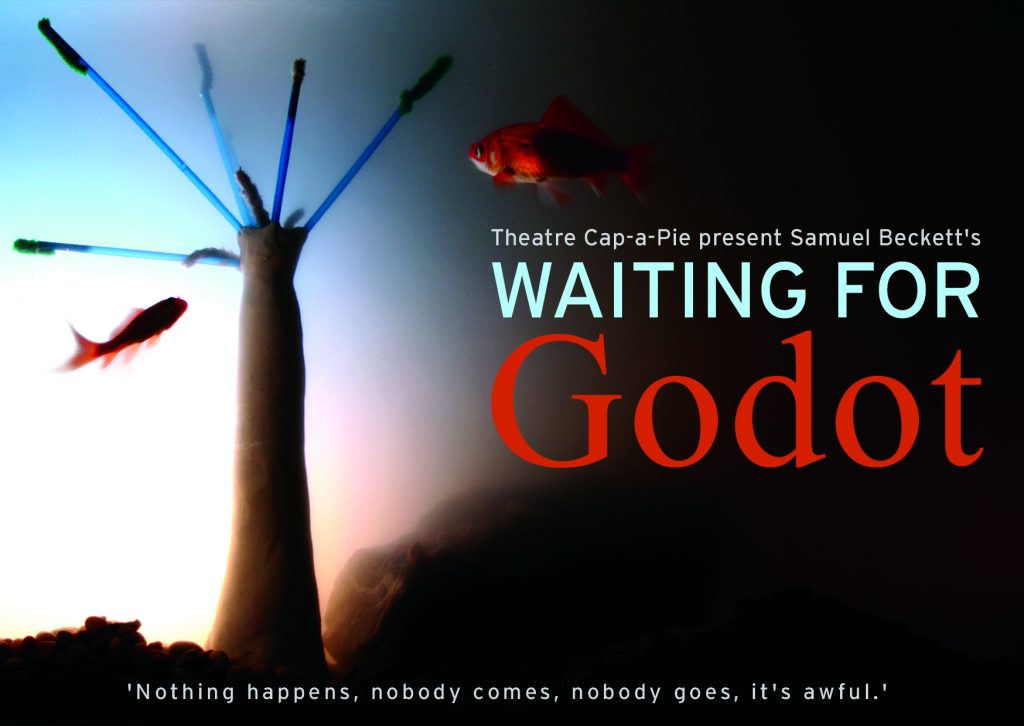
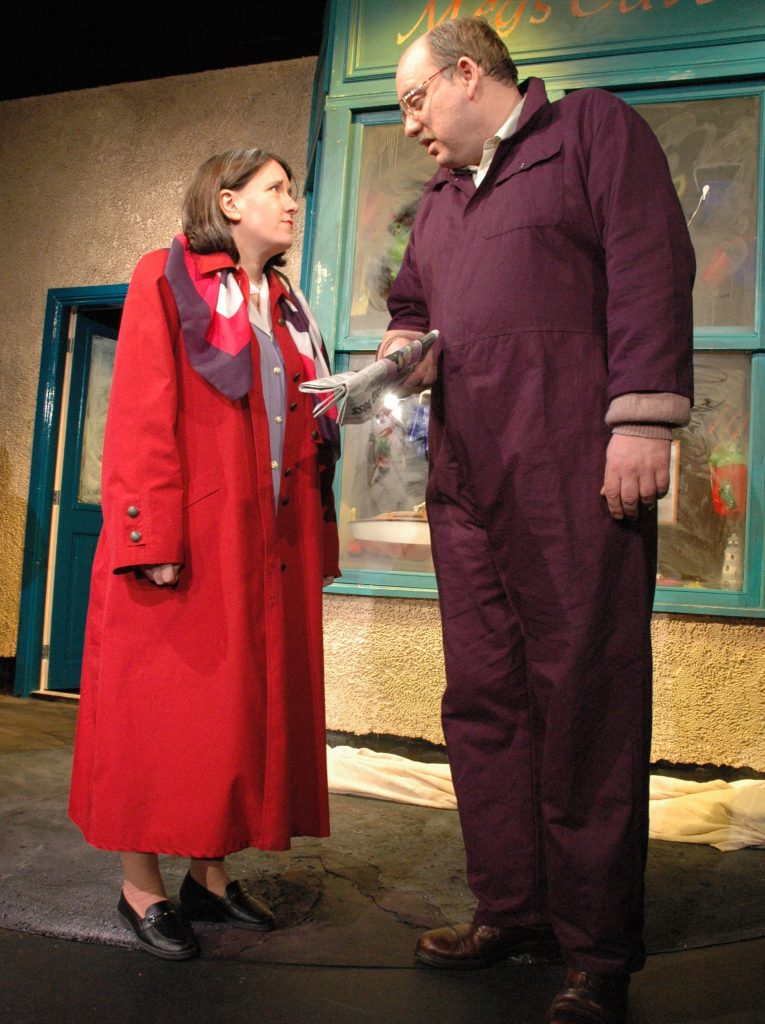
2006 – Waiting for Godot
This project saw 60 primary school students work with Cap-a-Pie to stage Samuel Beckett’s classic play ‘Waiting for Godot’.
The project entailed 10-weeks of intensive theatre workshops that encouraged the young people and teaching staff to explore and investigate the process of theatre production including: direction, set design, staging and script analysis.
Cap-a-Pie worked in the schools for 10 weeks and explored the pupils’ perspectives on the play.
Tony Metcalfe, Head Teacher of Clavering Primary School was pleased with the results,“I first thought that it would be impossible for this play to be adapted for pupils as young as seven years old. I’ve been pleasantly surprised to discover that young children have an amazing depth for internalising situations and an immense capacity for absorbing creativity.”
2016 – Performance at the National Theatre
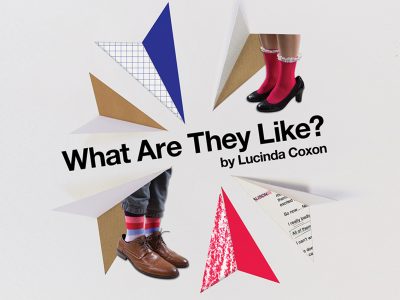
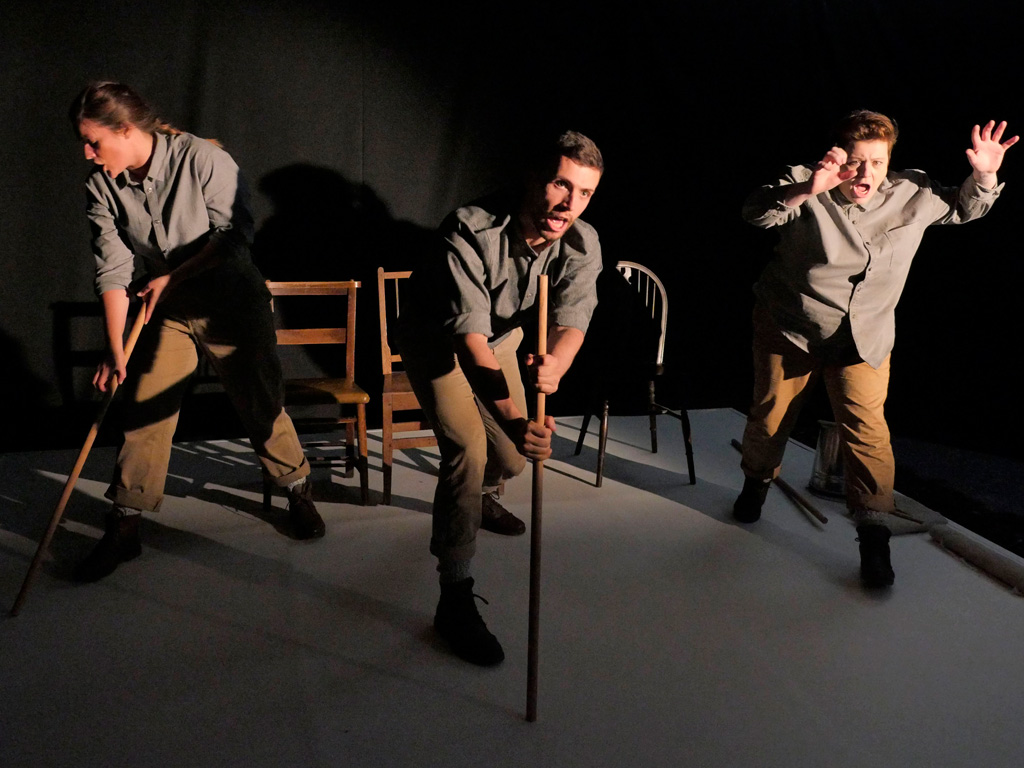
In June 2016 Barbara Priestman Academy and Cap-a-Pie’s production of ‘What Are They Like?’ was chosen out of 500 other companies to perform at the National Theatre Connections Festival at the National Theatre, London. The show, which was performed by students from Barbara Priestman Academy, was absolutely brilliant and we were very proud of the pupils and Brad McCormick from Cap-a-Pie who directed the show.
Prior to the performance at the National Theatre Cap-a-Pie had been working with Barbara Priestman Academy, Sunderland since 2009. The school is a secondary special school for students with Autism and/or complex learning difficulties. This long-term creative partnership fostered professional development opportunities and placed creativity at the heart of school life.
2018 – Woven Bones
When human remains were found in Durham in 2013, archaeologists discovered that they belonged to the Scottish Soldiers – prisoners of war from the 1650 Battle of Dunbar who were marched to Durham and imprisoned in the then-disused Cathedral and Castle.
Developed in partnership with researchers from Durham University, Woven Bones brought to life the untold stories of these Scottish Soldiers. This Cap-a-Pie production written by Laura Lindow offered audiences a unique chance to walk in the soldiers’ shoes. Woven Bones toured from Dunbar to Durham, the route marched by the soldiers.
2021 – Climate Change Catastrophe!
This new show gave audiences inspiring perspectives on one of the biggest challenges of our time – climate change. It shared what children think about climate change – their hopes, fears and ideas for the future. The filmed production was shown at COP26, the UN Climate Change Conference in Glasgow.
To create the show Cap-a-Pie worked with hundreds of children from across the North of England as well as scientists and engineers at Newcastle University. Everything in the show was directly inspired by the young people who helped to create it.
Originally planned as a live theatre production, the Cap-a-Pie team worked hard, alongside teachers, to engage young people remotely during Covid-19 and create a filmed production that continues to inspire audiences today.
2025 – Award win for School Partnerships
Cap-a-Pie was thrilled to win the Best Arts and Education Partnership at the North East Culture Awards 2025. Working in partnership with teachers and schools has been the backbone of much of our work since Cap-a-Pie first began. Our current programme with Newcastle and North Tyneside schools engages hundreds of young people each year. We use theatre to explore topics that young people care about most, and through our university partnerships share cutting-edge science. We’ve seen children’s confidence, teamwork and engagement grow.
Impact of Cap-a-Pie’s Work by Alison Whelan
I have been working with Cap-a-Pie to independently evaluate their work in schools since 2024. My evaluation highlights three consistent areas of impact in Cap-a-Pie’s work with schools.
For three decades, Cap-a-Pie has invited children and young people to step into new worlds, ask big questions and learn through creativity. Evaluation work across the past 18 months shows that this approach is having a clear, consistent and often transformative impact in schools.
Confidence
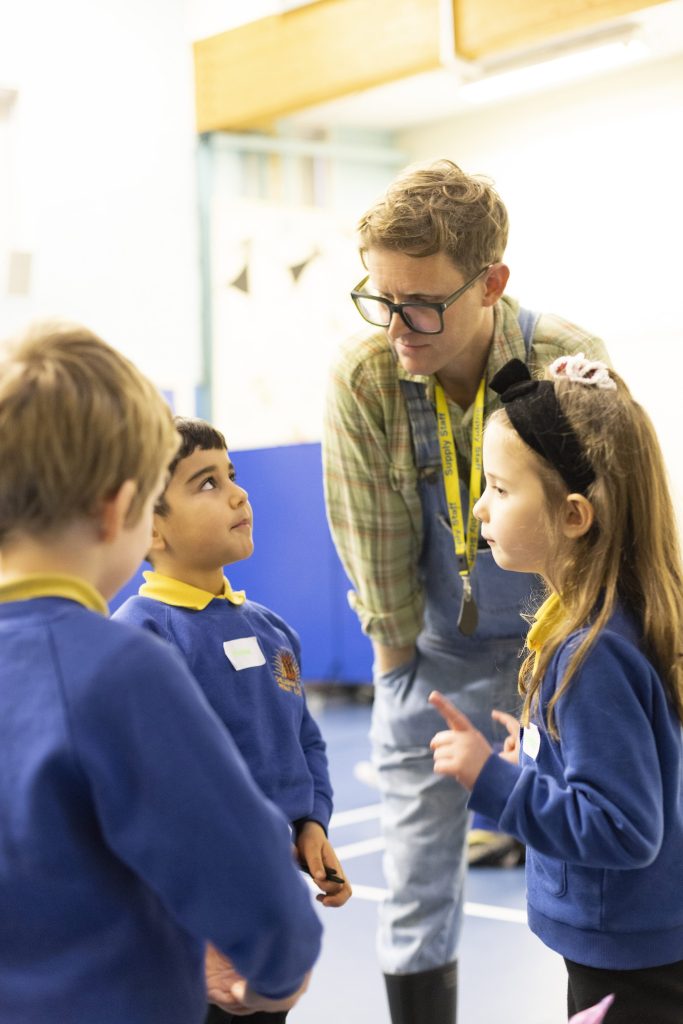
Teachers and facilitators consistently describe pupils becoming more willing to speak, perform and share ideas. Drama techniques such as freeze-frames, hot-seating and role-play give pupils structured ways to take risks and express themselves.
One teacher reflected that “confidence was a big focus for the children”, noting that many pupils who rarely speak in class were able to perform or present their thinking.
Engagement
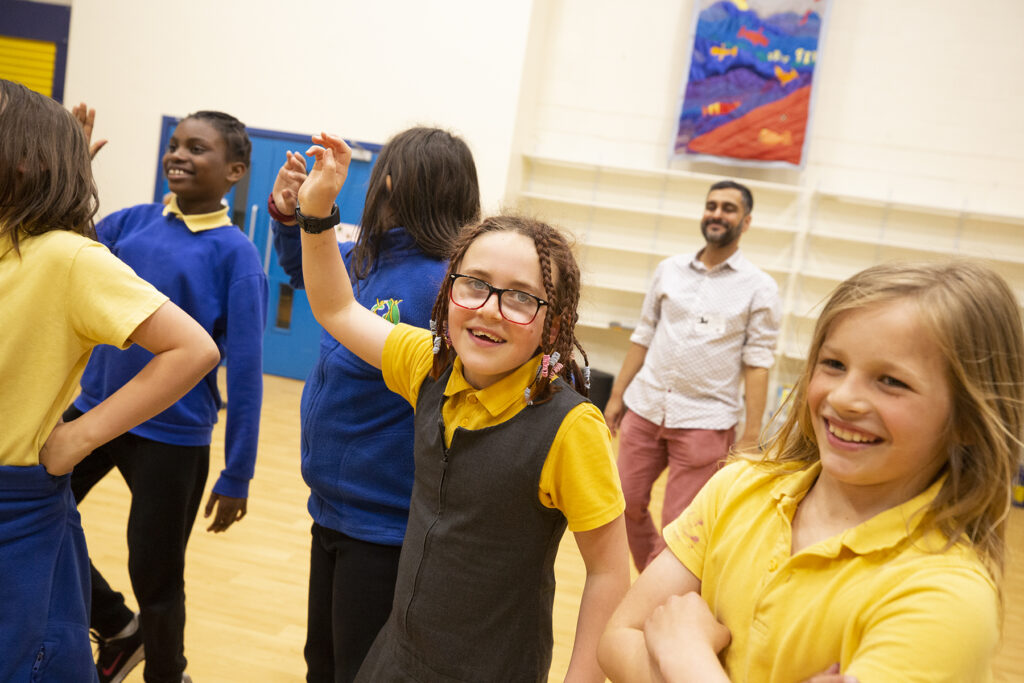
Cap-a-Pie sessions are designed to be active, imaginative and rooted in real-world questions. This style of learning captures pupils’ attention and encourages them to work together.
A student said: “When you’re just learning without anything, it’s not going to stick… when you’re doing fun stuff it helps stick in your head.”
Critical Thinking
Cap-a-Pie’s workshops introduce complex dilemmas, from climate change to animal ethics, and pupils respond with increasingly sophisticated reasoning.
One teacher noted that the project encouraged pupils “to think critically about their topic… analysing the potential impact of actions or evaluating different perspectives.”
Headline statistics from 2024-2025
Over 80% of pupils demonstrated increased confidence in speaking and presenting ideas.
More than 75% showed stronger collaborative skills, including working with peers outside their usual friendship groups.
Over 70% demonstrated improved critical thinking, particularly when responding to ethical or environmental dilemmas.
95 workshops, 839 participants, 31 classes, and 55 teachers took part in Year 1 alone.
51% of participating pupils were eligible for Free School Meals, demonstrating strong reach into disadvantaged communities.
Long-term impact
Findings suggest that Cap-a-Pie’s approach creates lasting benefits. Pupils remember the key ideas, stories and dilemmas long after the workshop has ended. Teachers report that pupils continue to use the language of reasoning, empathy and collaboration in other lessons, indicating that the skills developed through drama and inquiry extend well beyond a single session.
People
Hear from some of the key people who have shaped Cap-a-Pie over the years.
Brad McCormick
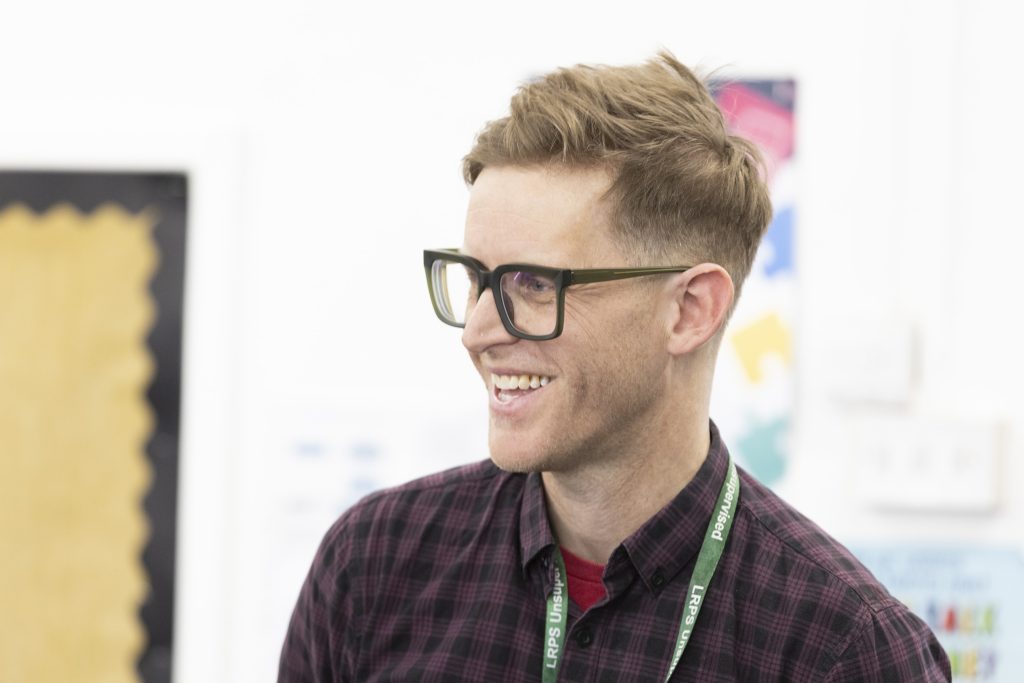
Brad is Cap-a-Pie’s Artistic Director who recently celebrated 12 years leading the charity.
“I’m really proud to have been part of a company that has been so successful for so long and has worked with so many people on such a huge variety of projects.
The ‘Climate Change Catastrophe!’ films are what stand out for me most. It’s an issue that we care about, we made it in full collaboration with young people, and what we created back in 2021 is still being used now, making kids laugh and think. And each time I watch the films with a class, I think, yeah, these are really good”.
Cap-a-Pie Founders – Gordon Poad and Annie McCourt
Gordon Poad, one of Cap-a-Pie’s founders, and Artistic Director until 2014, was a key figure in shaping Cap-a-Pie. Another of Cap-a-Pie’s founders, Annie McCourt continues to lead conversations around the value of the arts in education.
“When children take part in this kind of creative work, they come away feeling that they matter – that their ideas are valued and that they are part of something bigger.
When we honour children’s contributions in that way, it helps them see themselves as part of their community. That sense of belonging can stay with them for life.” – Gordon Poad
“Creativity in education isn’t just important for young people. Working in this way helps everyone to grow – teachers, artists and students.
Being in that playful, imaginative space enables us to think in ways that are not always possible within the requirements of formal education.
I believe in walking alongside people so that they get the opportunity to speak in their own voice and say the things that they feel are important in a way that enables other people to hear them.” – Annie McCourt
Roma Yagnik
In 2014 Cap-a-Pie began our journey to becoming a charity and Roma was one of our first trustees who supported us through this transition.
I’m really proud to have been a Trustee of, and subsequently created music for Cap-a-Pie. The clear vision and remit laid out by Katy and Brad and their passion for what they were doing made me want to be involved. ‘
Marvellous Microbes’ is a particular highlight for me – to turn microbes into such an engaging show that can also be toured with virtually zero negative environmental impact is really impressive and innovative.
Enabling schools to provide children with creative and varied ways of understanding the world is more vital than ever and I’m really glad that Cap-a-Pie does that brilliantly.
Laura Lindow
Laura Lindow is a director and writer who has worked with Cap-a-Pie on several productions including Woven Bones (2018) and Marvellous Microbes (2024).
“It is heartening that such a great, inventive and unassuming company endures, its work and ambition, impact and reach never more essential! We are all valued as stakeholders in a Cap-a-Pie project whether participant, audience, advisor or creative, and the team match us in their sensitive collaborative approach.
| love the way Cap-a-Pie hold great and serious topics up to the light using theatre and creative engagement and ask for everyone’s eyes on. This is the way our world’s future paths will emerge. With young people holding science, history and politics not as revered specialisms but rather as tools in their hands to forge new ways ahead.”
Our collaborators
Cap-a-Pie is nothing without our collaborators. We believe strongly in building strong partnerships with community and educational organisations.
Dr Alistair Ford, Newcastle University
Alistair is a long-time Cap-a-Pie collaborator who first worked with us to create Climate Change Catastrophe! (2021) and continues to visit schools with us to talk to young people.
“Often my research on climate change works with data or maps, and the people I talk to are government departments or consultancies, so it was great to be able to talk directly to young people in the classroom and see Cap-a-Pie bring those, often abstract, concepts alive. They translate difficult topics into fun and engaging classroom activities that help the students to engage and understand.
I took away a renewed appreciation of Cap-a-Pie and the work that they do, the skill they have in translating a challenging topic into engaging activities and telling important stories in an accessible way.”
Craig Heeley, Headteacher, Lemington Riverside Primary School
We have worked closely with Lemington Riverside Primary for several years delivering projects across the school.
“Working with Cap-a-Pie has had a transformative impact on our children at Lemington Riverside Primary School. Their creative approach brings the curriculum to life in a way that is both inspiring and accessible for pupils of all ages. The workshops capture children’s imaginations, building their confidence and sparking creativity, while also deepening their understanding of key areas of learning.
It has been wonderful to see children who might usually be reluctant to participate becoming fully engaged, motivated, and eager to contribute. The impact has been just as strong for our staff. The workshops have acted as a valuable professional development tool, modelling fresh approaches and practical strategies that teachers can take back into their own classrooms. This has not only enriched our arts provision but also strengthened teaching and learning across the wider curriculum.
Cap-a-Pie’s work has genuinely made a difference to our school – lifting children’s aspirations, broadening their horizons, and giving both staff and pupils new and exciting ways to think, create and learn.”
Dr Meryl Batchelder, Ministry of Eco Education previously Middle School Teacher
With a background in both scientific research and classroom teaching, Meryl is now an enthusiastic communicator on climate, nature and sustainability education. We recently worked with Meryl to develop our Coal & Climate project for Key Stage 2 students.
“As soon as I came across Cap-a-Pie’s incredible Climate Change Catastrophe! videos, I knew I’d found what I was looking for. My classes watched the series over a few lessons, had plenty of time for discussion, and sang along with the songs. The pupils then made model wind turbines, talked about the solutions we already have, and used creative thinking to come up with ideas of their own. Above all, although the science in the videos is thoroughly robust, there was laughter and smiles in the room.
The team at Cap-a-Pie has continued to amaze me with their creativity with The Vanishing Act and Marvellous Microbes. They have a talent for making complex ideas tangible. As a scientist, I recognise that hard facts alone aren’t going to change the world for the better. We need the creativity of drama and music to create a sense of community and inspire collective action, motivating children to step up and be seen.”
Case Studies
These case studies show how our work translates into real experiences for young people, teachers and our partners.
Climate Change Catastrophe!
‘Climate Change Catastrophe!’ (2021), an award-winning filmed theatre show, exemplifies our work. We brought together young people from the North of England, engineers at Newcastle University and professional creatives to make a filmed theatre show on a topic that young people care about deeply.
The show gives inspiring perspectives on one of the biggest challenges of our time – climate change. It’s all about what children think about climate change – their hopes, fears and ideas for the future.
The film was shown at the UN Climate Change Conference (COP26) and won the UK Green Gown award for Benefitting Society.
Young people who took part in the project valued the opportunity to share their thoughts on climate change with a wide audience. A student commented, “I think it’s very good that ‘Climate Change Catastrophe!’ is being shown at COP26, it’s a better chance of kids’ ideas getting out into the world.” Another said, “I feel very angry. It made me want to save the world.”
Feedback from audiences for the show was also very positive. Young people who watched the films said, “I loved it and I thought it was a lot more serious and it was very deep. It was really fun to watch” and “This was great, if I had seen it on TV I would have watched it after school every day. It was funny and informative”.
Online audiences said, “Will make you think & laugh!” and “This from @capapiecreative might just be a work of towering genius.” Several students told us that they enjoyed the films so much in class that they had watched them again at home. We continue to engage young people with the films and related creative activities across our partner schools, helping them explore climate change through creativity and discussion.
Operation Walker
In May 2025, Cap-a-Pie delivered a new project with Year 8 students at Sir Charles Parsons School in Newcastle, a school we have worked with for several years. Inspired by ‘Goodnight Mister Tom’ – the story of a wartime evacuee – the project explored themes of friendship, safety and identity, supporting students’ learning and providing space for creativity, reflection and fun.
The project took place over four sessions. It was made in consultation with the school and designed especially for this group, building on our previous work at the school.
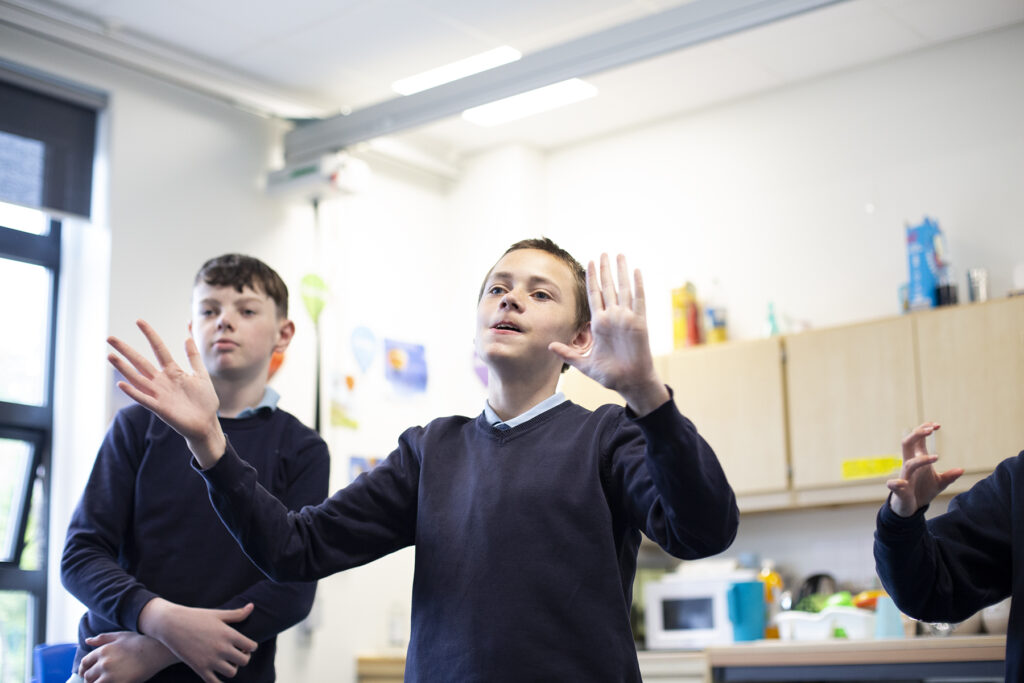
The workshops combined theatre and drama games with Philosophy for Children to provide opportunities for structured discussions. A highlight of the workshops was using a Box of Delights from North East Museums – a box full of objects linked to WW2 evacuees. Students used the objects to create freezeframes – for example, one student held a rabbit soft toy and pretended to be waiting on a train platform. Other students built out the image – becoming train tracks, luggage and people waiting.
I wanted as many students as possible to have the drama experience based on Goodnight Mr Tom because we’ve never done that before. I also wanted the students to work with others they wouldn’t usually work with – to do something together.
Our students are taught in learning pathways, not all of them are verbal – some use a range of communication strategies such as VOCA (communication device) signs or symbols. It’s really valuable to see those students offering comments, answering questions and sharing their ideas with others.
The whole project just blew me out of the water. The students got really involved. Nobody fell behind – they all kept up and supported each other. Our students never cease to amaze when they’re challenged – and they really were, with the range of drama conventions you [Cap-a-Pie’s facilitator] used. I can’t explain how well it worked – but I think it’s down to Cap-a-Pie’s expectations of them. There were so many standout moments. – Clare Grahamslaw, Teacher at Sir Charles Parsons
Marvellous Microbes
In Spring 2024 we developed a new workshop suitable for Key Stage 1 students in school settings as well as families in community and cultural venues.
We have now delivered the workshop 26 times and reached 681 participants. We have delivered it in schools, theatres and environmental festivals and events.
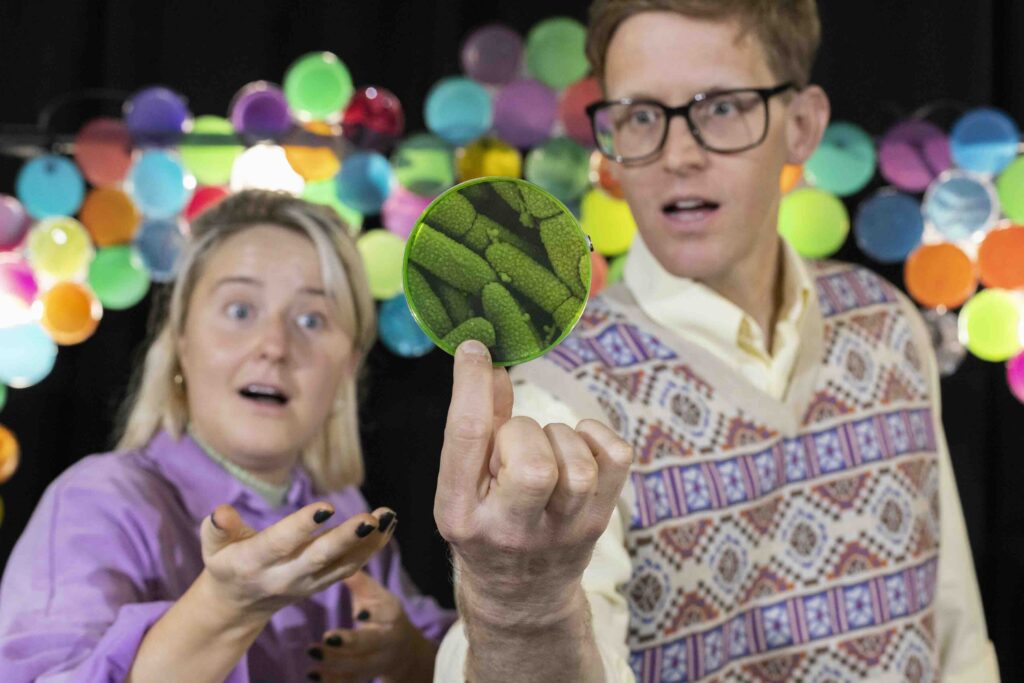
During the workshop, participants listen to a story and song about microbes, then take part in theatre activities that share facts about microbes and what they can do.
We wanted to ensure activities were accessible for as many people as possible. We worked with an audio describer to integrate audio description in the workshop. Both facilitators included Makaton in their delivery. Families and teachers praised the use and Makaton and commented on how it made the workshop more inclusive.
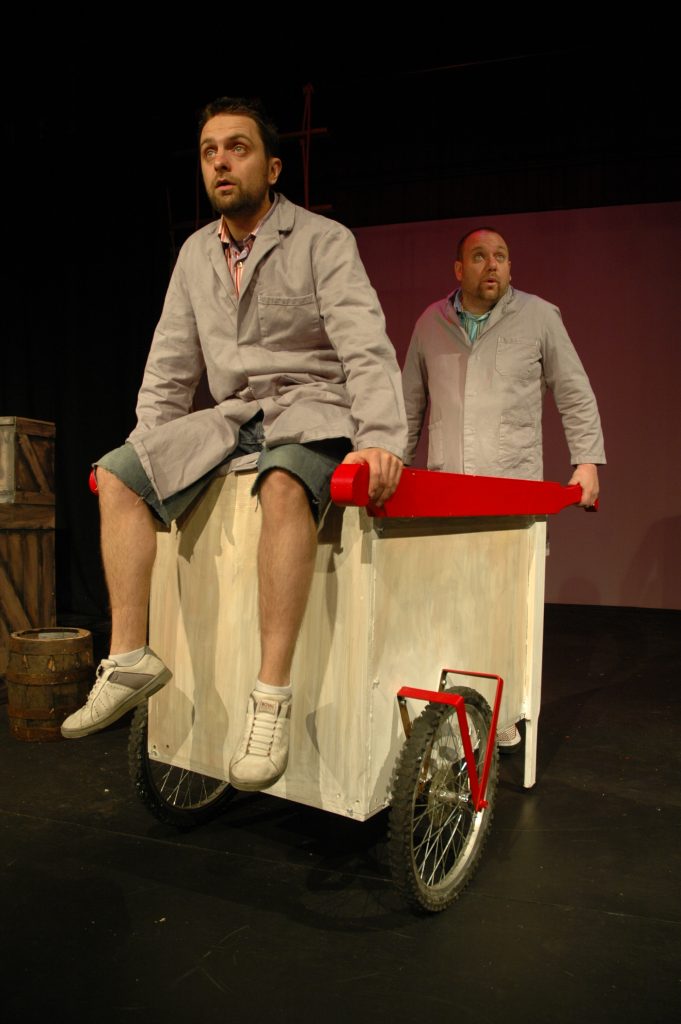
We wanted the project to have as low environmental impact as possible. We used the Theatre Green Book which provides guidance and targets on minimising use of new materials. We also created the set so it could be transported by bike.
Participants really enjoy taking part in the workshop. They particularly like the drama games and activities where they learn by moving like microbes and creating freeze frames to show things microbes do.
A teacher said, “We should teach everything like this”. A parent said, “That was fab! So well paced, warm and engaging.” A participant thanked us for “teaching us about microbes” several weeks afterwards when we were in their school for another project.
Thank you!
We couldn’t do what we do without the support of everyone who has funded and commissioned us over the years. Thank you all!
Carla Greenwood, Foundation Administrator, The Shears Foundation
“What appeals to us as a foundation is that Cap-a-Pie create a platform for young people to explore subjects and topics in a creative and fun way, giving them the opportunity to learn from professionals that they otherwise wouldn’t have the opportunity to meet.
When I observed the session, I noticed that they had tricks up their sleeve for every possibility which confirms to us that they have built up a wealth of experience from carrying out this work. The session was very fast paced which kept all the children engaged and most importantly, they had fun.”
Looking ahead
The future looks bright for Cap-a-Pie.
We are currently part way through a Paul Hamlyn Foundation three-year project that is seeing us develop our partnership work with schools. It is brilliant to have the time and resources to explore how our work can be most beneficial for all the young people we engage with and how we can support teachers to use more theatre and drama in their teaching.
In 2026 we have grown our small team and welcomed Jeannie May Adam. Jeannie is helping us to reach more young people in local schools.
We continue to develop our work with universities and researchers. Current collaborations will see us bring cutting-edge research to more young people in Newcastle and beyond. We are collaborating with experts in space and the hunt for alien life, dental health and the history of childhood. Watch this space for lots more fun, thought-provoking and imaginative theatre coming soon to a school, venue or community space near you!
We use cookies on our website to give you the most relevant experience by remembering your preferences and repeat visits. By clicking “Accept”, you consent to the use of ALL the cookies.
This website uses cookies to improve your experience while you navigate through the website. Out of these, the cookies that are categorized as necessary are stored on your browser as they are essential for the working of basic functionalities of the website. We also use third-party cookies that help us analyze and understand how you use this website. These cookies will be stored in your browser only with your consent. You also have the option to opt-out of these cookies. But opting out of some of these cookies may affect your browsing experience.
Necessary cookies are absolutely essential for the website to function properly. These cookies ensure basic functionalities and security features of the website, anonymously.
Cookie
Duration
Description
cookielawinfo-checkbox-analytics
11 months
This cookie is set by GDPR Cookie Consent plugin. The cookie is used to store the user consent for the cookies in the category "Analytics".
cookielawinfo-checkbox-functional
11 months
The cookie is set by GDPR cookie consent to record the user consent for the cookies in the category "Functional".
cookielawinfo-checkbox-necessary
11 months
This cookie is set by GDPR Cookie Consent plugin. The cookies is used to store the user consent for the cookies in the category "Necessary".
cookielawinfo-checkbox-others
11 months
This cookie is set by GDPR Cookie Consent plugin. The cookie is used to store the user consent for the cookies in the category "Other.
cookielawinfo-checkbox-performance
11 months
This cookie is set by GDPR Cookie Consent plugin. The cookie is used to store the user consent for the cookies in the category "Performance".
viewed_cookie_policy
11 months
The cookie is set by the GDPR Cookie Consent plugin and is used to store whether or not user has consented to the use of cookies. It does not store any personal data.
Functional cookies help to perform certain functionalities like sharing the content of the website on social media platforms, collect feedbacks, and other third-party features.
Performance cookies are used to understand and analyze the key performance indexes of the website which helps in delivering a better user experience for the visitors.
Analytical cookies are used to understand how visitors interact with the website. These cookies help provide information on metrics the number of visitors, bounce rate, traffic source, etc.
Advertisement cookies are used to provide visitors with relevant ads and marketing campaigns. These cookies track visitors across websites and collect information to provide customized ads.